Hurricane Envy by Sara Jaffe
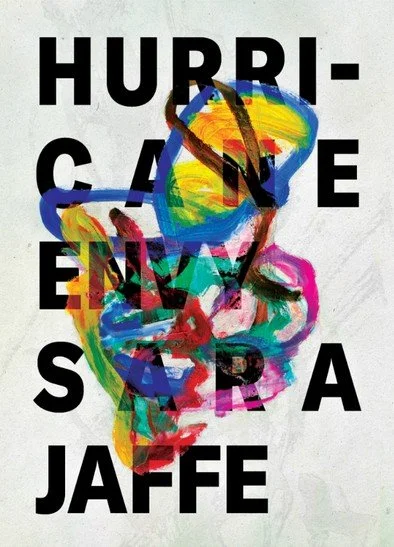
Hurricane Envy
by Sara Jaffe
Rescue Press
October, 2025
Hurricane Envy by Sara Jaffe, forthcoming from Rescue Press this October, is a collection of stories that “casually sidestep the conventional to create something revelatory and fresh.”
I had the pleasure of getting to review this book early, and its many complicated, tangibly flawed, yet effortlessly likeable characters were a fascination to read!
Because of this book’s preoccupation with music, I feel the need to write of it like an album rather than a book. However, I am not a music reviewer and trying to do that properly out of nowhere sounds perhaps disrespectful to music reviewers. What I can convey, mode be damned, is that these stories are songs that share a “genre” — not in a literary sense, but like djent or post-[rock/classical/etc]. If this book had a single, a defining song that feels like the soul of the whole, it’d be “Arthur Why.”
One line from “Arthur Why” caught my attention for how it could be relatable to many readers, but how it related to the majority of characters throughout the collection:
“He had a good belief in the power of proximity, of connection, of standing next to things until they happened.”

Due to the stories’ proximity in the book’s arrangement, it’s easy to identify this psychocosmic strategy in “A Form of Love”’s speaker who simply believes (correctly) they will become famous and surrounds herself with others actively seeking fame, as well as in the anxiety-ridden relationships between the speaker and Celia and their cities in “Stormchasers.” But this sentiment of passive manifestation, of reliance on not-trying and inaction-as-action, is prevalent in all the unsaid conversations and moments of pause characters take over and over again throughout the book. It’s even echoed in the flow of this book being all flash fiction, small stops standing next to each other, next to something different happening while their own characters stand still in the peripheral pages.
That arrangement mirrors many of Arthur’s perspectives and behaviors, ringing a bell all over the collection as whole. The way he plays music, and what fosters a connection between him and Dusty, creates its own universal rules for how the stories will go:
“It was a good beat. It sounded like someone falling down a short flight of stairs. Was the person okay? It didn’t matter. That was what Arthur liked about playing the electronic drums, it always sounded like something. […] Arthur felt the notes hover, these long notes that didn’t have any rhythm to them, that didn’t concern themselves with rhythm, that let Arthur be the one falling down the stairs over and over if he wanted to.”
Even his retort about The Beatles:
“Think about how many times you’ve heard every Beatles song. By this point you know exactly what’s going to come around every corner. With music like gamelan that intentionally repeats, you don’t expect change so you’re more affected by the smaller changes.”
is called back to in several of the stories, becoming both an expectation (characters’ net-neutral feelings about the band, the very expectedness of Beatles music being something to contrast against in the music the characters are actually listening for) and a subversion (oh, hey The Beatles again! I should play Beatles/references Bingo with this book wow!). Whether it be the preoccupation with music, with the stuckness or stickiness characters feel, or the many sprinkled references (lapis, sea glass, writers, parenthood, more), Hurricane Envy echos its own themes and tones like “sounds [that] were separate but connected, shadowing each other, as if the second sound were the first one’s memory” (“Arthur Why”).
To talk about Hurricane Envy more like a book, another merit of craft is its flow of language. It is with a fond irony that Jaffe succeeds where her writer character from “Today’s Problems” struggles: “[The sentence] lacked ominousness, urgency. In the past, I’d often written sentences and deleted and rewritten them on a quest to drill deep into the caverns of syntax, to mine elusive veins of diction and sound.” Her often-subtle (sometimes not — for example, “Ether”’s circling rambles and “Dogpatch”’s pedaling rhythm) syntactical choices and fishbowl-like pacing frequently inspire ominousness (waiting for a shoe to drop in the next line or scene, like the reader is standing next to the stories for ~something~ to happen) and urgency (the characters are constantly afraid something will happen, standing still so maybe the something will either not happen or perhaps happen without them, whichever is worse). The writing puts its characters in a hole of yearning/anxiety as much as they do themselves by constructing their sentences to the beat of their own unique drums.
Overall, Hurricane Envy is a masterclass in self-contained tone. The flash forms and liminal moods may not vibe with all readers, but it will certainly speak to those who recognize themselves in the act of searching for a feeling, in searching for the word for a feeling, and in searching for a “should” feeling yet still finding only a type of “otherness.” And, above all else, Hurricane Envy will make you want to listen to music. I highly recommend the album Soul Rot by Artio as a companion playlist.
Hurricane Envy releases this October from Rescue Press! Learn more about the collection and pre-order your copy here: https://rescuepress.co/books/p/hurricane-envy
Thank you Rescue Press for the complimentary ARC of this title! I appreciate the early opportunity to read Sara’s work and can’t wait to see it out in the world. :)
— Kylie